Wednesday, April 27, 2016

I Could Never Take The Place Of Your Man: Memories Of Prince


  I never wanted to be Prince.
  At various points in my musical life, I did want to be Springsteen, or Dylan, or Tom Waits, or even Eddie Vedder. I wrote songs that emulated—or, more accurately, ripped off—all of the above, plus The Replacements, The Cure, U2, Alice In Chains, and Smashing Pumpkins for good measure. But never Prince. That sounds like a slight, but it wasn’t. It was the highest level of respect.
  Those other guys with guitars wrote songs that sounded like, well, guys playing guitars. Their chords were the same chords I could play, the same sounds I could clumsily create. Their voices sounded like my voice, but better. They were ideals to aspire to, targets that were far off but attainable. If you squinted hard enough, you could trace the path they took, and if you listened even harder, you could (sometimes) pull apart the magic and figure out the tricks yourself.
  But I could never do that with Prince. Prince wasn’t of this earth. Prince was on another plane altogether, living in a separate realm where music was effortless and songs emerged like Athena, fully formed every time. Shooting for Prince would be like shooting for the sun: Even if your aim was perfect, your range could never even come close.
  It wasn’t just that he was a genius songwriter and a genius instrumentalist and a genius producer. I honestly believe he heard things differently from you or I, as though some sounds were colors outside the visible spectrum, and his gift—his true genius, maybe—was capturing those sounds in a way that made sense to us, the mere mortals with our limited frequencies and narrow color palette. How else to explain “When Doves Cry,” a song that resembled nothing else on the planet when it debuted on May 16, 1984? How could a piece of music that sounded so foreign, so alien, also resonate so deeply with millions of people across all races, genders, and ages?
  I can vouch that it resonated with me, all of twelve years old, because that’s the period in your life when you absolutely have a Favorite Song Of All Time, and you can say that without irony or overstatement, and whereas previous Favorite Songs often changed month to month or even week to week, “When Doves Cry” became my FSOAT on its very first listen. And remained so for the next two years. I can’t fathom how many hours I spent during the summer of 1984, watching and rewinding and rewatching my VHS tape with the entire video recorded, in full, from its “world premiere” on MTV, mesmerized in that way unique to children first starting to realize the world is far bigger than they ever imagined.
  By that point I’d already fallen hard for Prince, thanks to “Little Red Corvette,” but I’d also fallen hard for Michael Jackson and Hall & Oates and The Police and Eurythmics too. (In hindsight, 1983 was an amazing year for pop music.) I wasn’t picking sides the way the media awkwardly would years later, but in sixth grade? I was all Team MJ. He was the easy choice: The non-white musician all the white kids loved, the wholesome superstar who won the approval of my Republican parents by posing with Ronald Reagan, the pop sensation so iconic a skinny little Caucasian boy with no discernible dance skills could dress like him for Halloween (red jacket, white T-shirt, one glove) without raising too many eyebrows.
  But Prince? Prince was something else altogether. He wasn’t safe or wholesome. He was freaky. Dangerous. The stuff of month-long punishments and bans on further MTV watching. His early videos were lit like cheap motels, all neon reds and purples and flashes of pure white, and his band was a mix of men wearing eyeliner and women wearing lingerie, their skin black and white and shades in between, and there he was swirling in the center, a trenchcoat-clad figure who fascinated and scared me in equal measure. I was too young to have even a vague concept of sex (it would be a couple years before my friend matter-of-factedly explained what the “pocket full of horses” line meant), but I already understood Prince exuded the sort of raw, pulsing energy that my more clean-cut heroes—your Halls, your Oates—never did.
  And that was both lure and terror.
  One night I snuck downstairs (past my bedtime) to watch the local Atlanta video music station (banned by my parents), so I was already a double sinner when the clip for “Controversy” came on. In the video, Prince performs in front of a church's stained glass window, dressed like a French dandy, lit by glowing crosses, singing “Do I believe in God?/ Do I believe in me?” in a voice pitched above a woman’s register, all the while staring down the camera like a man possessed.
  I wasn’t even a year removed from private school, and I thought the music was amazing. I also thought I might burn in hell just for hearing it.
  But I needed to hear it, regardless. All of it. I borrowed three tapes from some older, cooler kid on the bus: 1999, Controversy, and Dirty Mind. I already knew and loved the first three songs from 1999, thanks to Top 40 radio. These versions were longer, weirder, stranger, but still in my comfort zone.
   The fourth song was “Let’s Pretend We’re Married.” I listened to the entire thing, mesmerized, with that same combination of fascination and terror. And then I rewound the tape, and listened again, but this time with the volume turned down. Way down.
  Could my mom hear the words through the walls? I couldn’t take that chance.
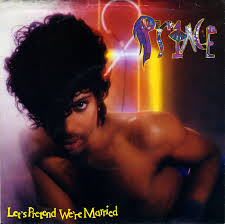
  The music was primal, but futuristic. Simple and crude, but otherworldly. Stripped down to the barest minimums of beat and melody, yet absolutely engulfing. The vocal was pitched high, again, but now with other voices in the mix, some lower and some barely discernible, like a stranger whispering lewd advances in your ear. They were all Prince, all the versions of him, and then they dropped away until there was just a single Prince, talking not singing, and he was definitely talking about S-E-X with words that left nothing to the imagination, words that would get me grounded for weeks just being in their vicinity. And then the other voices returned, seven minutes in, every single version of Prince now flat-out confessing his (their?) love of God.
  In unison.
  Followed immediately by a promise to have fun every motherfucking night.  
  I was eleven years old. I’d never had a single face-to-face encounter with an African-American. I’d never kissed a girl. I’d never even held hands with a girl. But I now possessed cassette dubs of Prince, unfiltered, singing songs about dirty minds and head and sisters and lady cab drivers and all the places he would jack U off.
  To say that Prince blew my world apart is a slight understatement.

  He wouldn’t be the last one who did that, of course. As the decade wore on, my love of music expanded along with my tastes, in the same manner as countless other white suburban teens: Zeppelin and Rush, New Order and The Cure, INXS and Guns N’ Roses. Michael Jackson fell by the wayside, at least for the short term, along with Hall & Oates and countless others from my awkward past.
  But Prince? Prince never left. When the rest of my peers stopped caring after Around The World In A Day turned out not to be Purple Rain 2.0, I stayed on board, if just for “Raspberry Beret” and “Paisley Park” and “Pop Life.” Parade was the first album I bought in a real record store (Turtle’s Records & Tapes in Snellville, GA), mainly due to my infatuation with “Kiss” (my FSOAT for the rest of 1986), and there were enough lifelines on that one—“Girls & Boys” and “Mountains” and “Kiss,” of course—to make up for all the moments I simply wouldn’t, or couldn’t, grasp at the time. When you’re an eighth grade boy yet to experience any significant losses, you can’t appreciate “Sometimes It Snows In April” for the masterpiece it truly is. Prince was already there, but I wasn’t. I had to mature into him.
  My grandfather passed away the week I bought Sign ‘O’ The Times. It was the first death of any kind I’d ever experienced, and I still remember how my mom was crying when she picked me up early in the school parking lot, and then I was crying too, and I sobbed all afternoon and all night in my bedroom with that Prince cassette on a steady loop, finally hearing all the levels and layers that were there all along, waiting for me to really understand. Sign ‘O’ The Times isn’t a particularly dark record, but it’s shot through with sadness and spirituality—especially on “The Cross” and “Forever In My Life”—in ways that rarely exist in pop music. Because this was pop music for adults, not kids, and while I wasn’t an adult yet, I was finally on my way to becoming one.
  And of course Prince was there, guiding me and shaping me, even when I wasn’t fully cognizant of his influence in my life. I was a good Christian boy in a deeply religious household, but I was also a teenager with raging hormones and a constantly frustrated libido. The constant push-and-pull between the flesh and the spirit suddenly seemed like a very real, very actual battle occurring inside me, a battle that Prince had already articulated with “Let’s Pretend We’re Married” and “Let’s Go Crazy” and “Darling Nikki” and now “Anna Stesia.” Years later, when he devoted himself to the Jehovah’s Witness faith and renounced all his “dirty” songs, I wondered—for maybe the first time—if Prince had been just as confused as I was. If he’d had the same questions about love and lust and God and sex and sin and redemption and the afterworld. If maybe he and I weren’t so different after all.
  Except, if I were being honest, I knew that was a lie. Prince was different from me, because he was different from everyone else who has ever lived. Even at my best, I was just an average-to-good musician with a bit of talent and the occasional knack for catchy songs, but Prince was Prince, a mythical figure with genius dripping off his fingertips and a voice that made women lose their minds and a guitar that made grown men cry. Even when I holed up in my bedroom layering tracks and vocals to create my own one-man band, it would never sound like Prince. Even when I finished my acoustic sets with an encore blowout of “Little Red Corvette” (an encore always received far more rapturously than any original composition I’d played that night), it would never sound like Prince. Even when I worked “17 Days” into the coda of one of the best songs I ever wrote and caught heads nodding in the crowd, I knew they weren’t nodding for me, but for Prince.
  And that was okay. All us diehards shared a bond, a common story told in a million different ways. We all paid tribute, and we all paid tribute with the understanding that we were a mere facsimile of his greatness, a blurry Xerox of a true original.
  I never wanted to be Prince, because deep down, I always understood I never could be Prince. None of us could. None of us ever will.
  That’s why his passing hit all of us so hard. We could live a hundred more lifetimes and still never get another one like him.
  But each of us got him. Once. In this lifetime.
  And that’s reason enough to celebrate.

A Celebration Of Prince: Part Two

Prince Rogers Nelson, 1958-2016. Godspeed.

A Celebration Of Prince: Part One

Recorded the morning after the passing of Prince. One of the greatest songs he ever recorded, in my small tiny opinion. I don't think I came close to doing this one justice, but regardless... Enjoy.


Friday, November 2, 2012

RUSH: A Fanboy's Guide Part IV: 2002-2012


Vapor Trails (2002)

Coming after the darkest period in Rush history, the release of Vapor Trails seemed a small miracle in and of itself, and initial reviews definitely benefited from five years’ worth of concentrated goodwill. With the luxury of hindsight, it’s clear the trio were still finding their sea legs; once past the full-throttle rush of “One Little Victory,” there’s little worth recommending here. Even worse, the mix of Vapor Trails fell victim to the last decade’s so-called “loudness wars,” its overly compressed sonics nearly unlistenable today. Until that long rumored remix arrives, skip it.


Rush In Rio (2003)

“Event” live albums are a mixed bag, and Rush In Rio is no exception; after the novelty of hearing 40,000 South Americans sing along with “Tom Sawyer” wears off, you’re left with a fairly by-the-numbers setlist and below-average sound (by Rush standards, anyway). Points for enthusiasm and the first-ever unadulterated setlist on disc, though.


Feedback (2004)

Most artists celebrate their longevity with a lavish box set or expensive reissue campaign. Leave it to Rush to mark their thirty-year milestone with… an EP of cover songs?? Coming from a band who’d never released a single cover version before, Feedback is an obvious anomaly, but not an unwelcome one; tackling time-worn touchstones like “Summertime Blues” and “The Seeker,” Rush sound looser than they have on record since… well, possibly ever. If you’re wondering how the trio shook off their late-period studio malaise to craft Snakes & Arrows, the rejuvenation begins here.  


R30: 30th Anniversary World Tour (2005)

A victory lap in audio/visual form, complete with crowd-pleasing opening medley (“R30 Overture,” AKA “Songs Geddy Doesn’t Like To Sing Anymore”) and a nice run through the highlights of “2112,” “Xanadu,” and “Working Man.” Beyond that, no real setlist surprises, and with two live albums in as many years, even the faithful were afraid Rush might be running on creative fumes at this point in their career. How wrong we were…


Snakes & Arrows (2007)

Don’t call it a comeback, indeed. Arguably the finest Rush album in nearly two decades, Snakes & Arrows finally weds the songwriting of old with the sonics of right now. Credit secret weapon Nick Raskulinecz for being the first producer since Terry Brown to accurate capture the trio’s sound in the studio, or simply marvel at the way Rush effortlessly roll back the years on “Far Cry,” “Armor And Sword,” and not-one-but-two fantastic instrumentals (“Malignant Narcissism,” “The Main Monkey Business”). At thirteen tracks, a few parts sag, but it scarcely matters; against improbable odds, Rush suddenly found themselves back in fighting form once again.


Snakes & Arrows Live (2008) 

The cure for Live Album Overload? How about a double-disc set with one-third of the songs pulled from the last studio album? Proving that Snakes & Arrows was no fluke, the trio double-down on their cult status with a fantastic mix of new material and the kind of deep album cuts (“Entre Nous,” “Circumstances,” “Digital Man,” “Between The Wheels,” “Witch Hunt”) that make true believers salivate. As a tour document alone, this is possibly their best since Exit… Stage Left; coming on the heels of its studio counterpart, Snakes & Arrows Live might as well be subtitled How Rush Got Their Groove Back.  


Time Machine 2011: Live In Cleveland (2011)

Never before has the gap between tour and souvenir been more pronounced. The Time Machine tour itself? Easily one of Rush’s best. Time Machine 2011? Disappointing, especially when you consider the amazing setlist or the near-frightening level of musicianship on display here. But there’s no disguising the flaws in Geddy’s vocals; mixed way out in front, his singing sounds flat and tired in a way it never did for the bulk of this tour. Cooler heads should’ve prevailed—or at least picked a different night to release. Instead, a missed opportunity all around.


Clockwork Angels (2012)

Raise your hands if you saw this one coming. Nearly forty years in, Rush release their first “proper” concept album, and damned if it isn’t the best thing they’ve done since Signals. With Raskulinecz back on board, Clockwork Angels is a focused, gutsy masterwork, as sonically varied as it is structurally sound. “The Wreckers” and “Wish Them Well” recall the anthemic surge of Power Windows without that record’s synthesized glop; “The Anarchist” and “Caravan” snarl with the heaviness of a band decades younger. And then there’s “Headlong Flight,” a seven-minute instant classic that sounds more like 1970’s era Rush than any track they’ve recorded since the actual 1970s. Clockwork Angels marks not just Rush’s highest American debut to date, but also a moment when their future seems more limitless than ever. Can’t wait to see what they conjure up next.

Saturday, January 28, 2012

RUSH: A Fanboy's Guide Part III: 1989-1998


Presto (1989)

New label? New producer? New decade? Whatever the reason, Presto found Rush eager to shake up their approach once more, abandoning layers of keyboards and feats of "look-at-me!" instrumental prowess in favor of a sparse, streamlined sound. If the intent was to shift focus towards the songs, the trio couldn't have picked a better batch; this is Rush at their most melodic and pop-friendly, veering between hard rock ("Chain Lightning," "Show Don't Tell") and moody balladry ("The Pass," "Presto") with effortless ease. The album's biggest flaw? A terrible production job from Rupert Hine that turns the band's attack thin and toothless. Fortunately, the songs have aged much better than their sonics, making Presto a lost gem and a reinvigorating comeback at a time when Rush needed it desperately.


Roll The Bones (1991)

The sea change initiated with Presto reaped dividends almost immediately, as Roll The Bones became the group's first Top 5 album in a decade and their biggest seller since Moving Pictures. Certainly the album's opening one-two punch doesn't disappoint, with the surging "Dreamline" (a setlist mainstay for six straight tours) finding perfect counterpoint in "Bravado," a composition as straightforward and haunting as anything in the band's catalog. But too many of the remaining eight tracks fall victim to rote riffs and the continuing curse of thin production, and when the trio does decide to experiment... well, that's the elephantor, more precisely, the rapping skeletonin the room. For a huge segment of fans, "Roll The Bones" marks a line in the sand; intentional joke or not, the song remains the most grievous example of Rush choosing to follow a trend, rather than chart their own path independent of pop culture. Unfortunately, that same philosophy would muddy the waters even further on the next album.


Counterparts (1993)

Rush were certainly not the only heritage act to view the surging "grunge" movement as an open invitation to crank up the guitarset tu, R.E.M.'s Monster?and after nearly a decade of fading into the background, hearing Alex Lifeson front-and-center for an entire record ain't entirely bad. But it comes at a price: Counterparts sounds less like Rush than any album before or since. The best tracks ("Stick It Out," "Animate") are heavy as hell but far too beholden to then-current radio trends; the weaker ones ("Nobody's Hero") betray an uncomfortable sentimentality that rarely surfaced in Peart's earlier lyrics. Interestingly enough, Counterparts' most enduring number completely breaks the guitar-centric mold, with the funky (by Rush standards, anyway) instrumental "Leave That Thing Alone" adding badly-needed levity to one of the trio's most leaden efforts.


Test For Echo (1996)

At least there's one solid takeaway from Test For Echo: "Power trio" Rush finally return for good. (Need a new Geddy bass workout? Try "Driven"! Wanna hear Neil navigate a million time changes without breaking a sweat? Enjoy "Time And Motion"!) Too bad the thrill of hearing the classic sound in action dissipates so quickly; for the first time in ages, there's no joy anywhere in these tracks, no spark of experimentation or creativity. Echo is simply Rush-by-the-numbers, plodding and predictable. Terrible circumstances would soon force the group into an extended hiatus; years later, their eventual return-to-form would make this record and Counterparts seem like momentary stumbles on the road back to greatness.


Different Stages (1998)

The "four studio, one live" album trend continues, and with a stopgap release to bootbut what a stopgap! With Different Stages, Rush offer a complete live show for the very first time, and while the setlist leans a little too heavy on inferior recent efforts (while shortchanging Presto in the process), the trio still find room for a few jaw-dropping revivals: "Natural Science," "The Analog Kid," and, unbelievably, the only full concert performance of "2112" to date. But for diehards, Discs One and Two are merely a two-hour warm-up to the main event: a previous-unreleased 1978 show from the Hammersmith Odeon, with the band at the peak of their prog-rock powers. "Cygnus X-1," "A Farewell To Kings," and "Cinderella Man" in brilliant live quality? One can only imagine what other Holy Grail artifacts Rush are still hiding in their heavily-fortified vault...

RUSH: A Fanboy's Guide Part II: 1980-1989


Permanent Waves (1980)

Neil Peart declares Permanent Waves the album where Rush was truly born, and who am I to argue? Certainly it's the beginning of their most accessible period to date, signaled with the very first electrifying notes of "The Spirit Of Radio"; the technical proficiency is still 100% Rush, but the mainstream touchesnods to new wave, actual chorusesbroaden the music in ways that longer epics never could. "Radio" remains the album's calling card (and the other Rush song everyone knows after "Tom Sawyer"), but it's far from the only highlight, as Permanent Waves finds the trio charting its clearest statement of purpose ("Freewill"), hitting new levels of emotional directness ("Entre Nous"), and yes, still acknowledging their prog-rock roots ("Jacob's Ladder"). All that, plus album closer "Natural Science," quite possibly the quintessential Rush song of all time: nine flawless minutes of everythingfrom IQ-level lyrics to stop-on-a-dime time-signaturesthat makes Rush so singularly unique.


Moving Pictures (1981)

The watershed, both in critical and commercial terms, as Rush found themselves in the enviable position of reaching their widest audience with (arguably) their best album. Side One alone is the stuff of legend, its sequence of four tracks"Tom Sawyer," "Red Barchetta," "YYZ," and "Limelight"now all staples on classic-rock radio and cornerstones of every Rush concert since. And without the worry of overexposure, the second half might hold up even better now than it did in 1981, with the trio shifting from the space-age reggae of "Vital Signs" to the brooding "Witch Hunt" and, finally, "The Camera Eye," their glorious farewell to extended epics. (It would be the last Rush studio track to top ten minutes.) Other albums have their supporters, but practically every true fan agrees on Moving Pictures: a hands-down classic, and justifiably so.


Exit... Stage Left (1981)

Even after the release of an additional half-dozen live platters, Exit... Stage Left remains the gold standard for Rush concert recordings, which only makes sense: how could a recording of one of the best live acts around playing songs from their best albums not be anything but astounding? As opposed to, say, Kiss Alive!, Exit... Stage Left didn't so much create Rush's reputation as solidify it, although one suspects countless new fans have still been converted over the years thanks to the playing of Side Onecoupled with variations on the phrase, "These guys sound just like the record live." Plus, you can credit (or blame) Exit for now-standard crowd singalongs to "Closer To The Heart," not to mention the constant level of godlike worship cast in Neil Peart's general direction. His solo on "YYZ" remains the most famous percussion workout this side of "Moby Dick"; listen close, and you can almost hear an entire generation of drummers having their minds collectively blown.


Signals (1982)

Following up Moving Pictures was bound to be an impossible task, and it's to the trio's credit that they made a conscious shift in direction rather than going for the easy sequel. Much maligned at the time, Signals holds up surprisingly well in hindsight, thanks to Rush now fully embracing the new-wave influence of bands like The Policeespecially on the "Man" cuts ("Digital Man," "New World Man")without abandoning any of their hard-won idiosyncrasies. Keyboards, while more prominent than ever, actually retain some genuine muscle in this context ("Subdivisions," "The Weapon"), and only the wet-balloon closer "Countdown" betrays any hint of the synthesized glop to follow on future albums. One dud aside, Signals is ever bit the equal of its more lauded Eighties brethren; perhaps more than any other title in the Rush canon, it's long overdue for reassessment.


Grace Under Pressure (1984)

Not like any Rush release before or since, Grace Under Pressure polarizes. Some love the dark, dystopian flavor of Peart's lyrics (Nuclear war! Death! The Holocaust! And that's just the first three songs!), while others suffocate under the record's remorseless bent. Either way, the music of Grace suits the overriding theme perfectlyagain, one might argue, perhaps too perfectlyfor this is one chilly album, all icy keyboards and spiky guitars, with nary a hint of the band's earlier, analog warmth to be found. When it works, it works well ("Between The Wheels" and "The Body Electric" in particular), but it also locks Grace Under Pressure into a particular mid-Eighties moment, making it a unique entry in the Rush catalogand an equally hard one to fully embrace.


Grace Under Pressure Tour 1984 (1985/2006)

Before the chronology complaints get too loud, a quick clarification: Grace Under Pressure Tour 1984 appeared on VHS and laserdisc in 1985, which puts its corresponding soundtrack in the same musical eraeven though more than two decades elapsed before a proper release. (It's been available in a box set since 2006, and as a standalone CD since 2009.) For the diehards, Tour 1984 marks the only official live performance of the "Fear" trilogy in order, along with the earliest airing of "Vital Signs." For all others, this is a much better summation of Rush's "synth period" than the cruddy Show Of Hands, although the truncated setlist greatly dilutes its impact.


Power Windows (1985)

Here's where everything goes off the rails. Whereas Signals and Grace were taunt, muscular records despite the heavy influx of keyboards, Power Windows is simply bloated, with nearly every spark of magic over-produced and over-sequenced within an inch of its life. There are still a few solid numbers"The Big Money," "Manhattan Project," and possibly "Marathon" before the choir kicks inbut even those have to fight through extra layers of studio polish just to resonate. Uniformity finally wins out on Side Two, which basically amounts to one very long, very synthetic song. Naturally, in the perverse spirit of the times, Power Windows became a big hit on rock radio and even MTV, meaning things would have to get worse before they got better...


Hold Your Fire (1987)

Imagine a sequel to Power Windows, but with more synths and fewer decent songs. Small wonder Hold Your Fire now feels like Rush's lowest point since Caress Of Steel, minus that earlier record's youthful charm. "Time Stands Still," miraculously, emerges relatively unscathed; every other track points to a band running on Auto Pilot. The only upshot? Hold Your Fire would spur Rush towards a period of drastic reinvention, with a new label and sound within the span of two years.


A Show Of Hands (1989)

The Rush formula of "four studio records, then a live album" finally bit them on the ass with A Show Of Hands, easily the weakest of the trio's numerous concert recordings. This is what happens when you spotlight a tour in support of the worst Rush album in over a decade: Eight songs (of fourteen) from Power Windows and Hold Your Fire, two songs total that predate Signals, and one drum solo (of course). Oh yeah, and uniformly flat sound throughout. Rush currently has nine official live CDs available; do yourself a favor and get the other eight first.